
Table of Contents
If you’re planning to start a small business on your own, one of the first questions you’ll likely ask is what is a sole trader and whether it’s the right structure for you. In Australia, becoming a sole trader is one of the simplest and most popular ways to operate a business.
This guide explains what a sole trader is, how it works, the tax rules involved, and what responsibilities you need to be aware of before getting started in 2026.
What Is a Sole Trader?
Simply put, a sole trader is an individual who runs a business as a single person. Unlike companies or partnerships, there’s no legal separation between you and your business. You own all the assets, keep all the profits, and take full responsibility for any debts or liabilities.
This business structure is ideal for anyone testing a business idea, running a side hustle, or preferring complete control over operations. With over 1.5 million sole proprietors in Australia, it’s clearly a trusted choice for entrepreneurs across every industry.
How Does a Sole Trader Business Work?
Operating a sole trader business means you’re in complete charge. You make all decisions, handle day-to-day operations, and manage your finances. The beauty lies in its simplicity—no complicated board meetings, no shareholders to answer to, just you and your business vision.
However, this simplicity comes with responsibility. As a sole trader, your personal assets are at risk if the business faces legal issues or debt. This unlimited liability is the main consideration when choosing this structure.
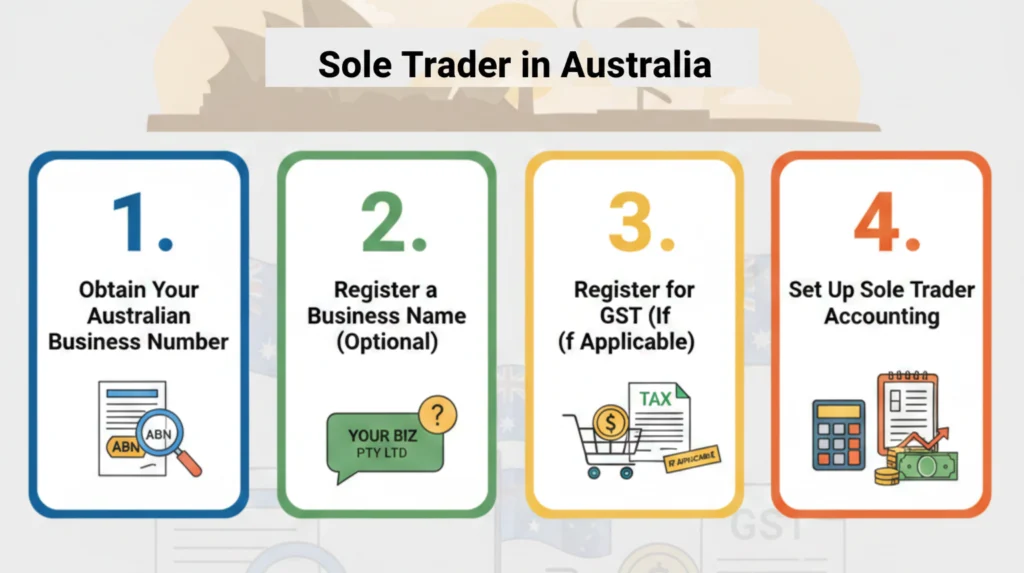
Setting Up as a Sole Trader in Australia
Getting started as a sole trader involves a few straightforward steps:
1. Obtain Your Australian Business Number
Your Australian Business Number (ABN) is essential for operating legally. It’s your unique 11-digit identifier that distinguishes your business from others. Registration is free through the Australian Business Register and typically takes less than 15 minutes. You’ll need your Tax File Number (TFN) to apply.
Without an ABN, other businesses must withhold 47% tax from payments made to you—a significant financial burden no sole trader wants.
2. Register a Business Name (Optional)
If you’re trading under your legal name, registration isn’t required. However, if you want a business name like “Melbourne Design Studio,” you’ll need to register it with an ASIC Registered Agent. The cost is $45 for one year or $104 for three years.
3. Register for GST (If Applicable)
Once your annual turnover reaches or is expected to reach $75,000, you must register for Goods and Services Tax (GST) within 21 days. This requirement ensures compliance with Australian tax law and allows you to claim GST credits on business purchases.
Even if your turnover is below this threshold, voluntary GST registration can be strategic, particularly if you have significant startup costs.
4. Set Up Sole Trader Accounting
Good record-keeping is non-negotiable. Maintain detailed records of all income, expenses, receipts, and invoices for at least five years. While you’re not legally required to have a separate business bank account, it makes sole trader accounting significantly easier and helps during tax time.
Consider using accounting software or hiring a professional accountant to keep your finances organised and compliant.
Understanding Sole Trader Tax Rate
One of the most important aspects of being a sole trader is understanding your tax obligations. Unlike companies that pay a flat 30% tax rate, sole traders pay tax at individual income rates.
2025-26 Sole Trader Tax Rate
The sole trader tax rate follows Australia’s progressive tax brackets:
- $0 – $18,200: Tax-free threshold (0%)
- $18,201 – $45,000: 16%
- $45,001 – $135,000: 30%
- $135,001 – $190,000: 37%
- $190,001+: 45%
Additionally, you’ll pay the Medicare Levy of 2% on your taxable income. Your business profit is combined with any other personal income to determine which tax bracket you fall into.
Tax Deductions and Offsets
The good news? You can claim legitimate business expenses as tax deductions, reducing your taxable income. Common deductions include:
- home office expenses
- Vehicle costs
- Equipment
- Insurance premiums, and
- Professional development
You may also qualify for the Small Business Income Tax Offset, which can reduce your tax bill by up to $1,000 annually if your aggregated turnover is under $5 million.
Lodging Your Tax Return
As a sole trader, you must lodge a tax return each year, even if your income falls below the tax-free threshold. Use a Tax return calculator to estimate your obligations, or work with a qualified accountant to ensure accuracy. The deadline is 31 October, following the end of the financial year, though using a registered tax agent can extend this deadline.
Public Liability Insurance Sole Trader Considerations
While not legally mandatory for all industries, public liability insurance sole trader coverage is highly recommended. This insurance protects you if a client, supplier, or member of the public suffers injury or property damage due to your business activities.
Coverage typically costs between $400 and $1,500 annually, depending on your industry and risk level. Tradies working on building sites, market stall owners, and those with government contracts often require proof of coverage before they can operate.
Consider these insurance types as well:
- Professional indemnity insurance for consultants and advisers
- Income protection insurance if you’re unable to work due to illness or injury
- Business contents insurance to protect your equipment and stock
Remember, as a sole trader, you’re not covered by workers’ compensation insurance. Protecting yourself through personal insurance policies is essential for your financial security.
Advantages of Operating as a Sole Trader
- Complete Control: Make all decisions without consulting partners or shareholders.
- Simple Setup: Minimal paperwork, low costs, and a quick registration process.
- Direct Profits: Keep all earnings after tax—no profit splitting required.
- Tax Benefits: Claim business expenses as deductions and access small business concessions.
- Privacy: Less reporting requirements compared to companies—no need to publish financial statements with ASIC.
- Flexibility: Easily adapt your business model, pricing, or services as needed.
Disadvantages to Consider
- Unlimited Liability: Your personal assets are at risk if the business faces debt or legal action.
- Limited Growth Potential: Harder to raise capital compared to companies, and may face challenges attracting investors.
- Tax Implications: Higher earners may pay more tax than they would under a company structure.
- No Employee Status: You cannot employ yourself or access workers’ compensation benefits.
- Workload: You’re responsible for everything—operations, accounting, marketing, and compliance.
When to Consider Other Structures
While the sole trader structure suits many small businesses, it’s not for everyone. Consider transitioning to a company structure if:
- Your profits consistently push you into higher tax brackets
- You need limited liability protection for high-risk activities
- You’re planning significant business growth or seeking investors
- You want to separate personal and business assets completely
Compliance Essentials as a Sole Trader
Beyond setup and insurance, sole traders must meet ongoing obligations:
- Record Keeping: Maintain detailed financial records for at least five years, including income, expenses, asset purchases, and vehicle logbooks.
- Business Activity Statements (BAS): If GST-registered, lodge quarterly BAS to report GST collected and paid.
- PAYG Instalments: After your first tax return, you may need to pay quarterly tax instalments throughout the financial year.
- Superannuation: While not required to pay yourself super, voluntary contributions are tax-deductible and beneficial for retirement planning.
Making the Right Choice
Choosing the sole trader structure is perfect for those seeking simplicity, control, and minimal administrative burden. However, the unlimited liability and tax considerations mean it’s not ideal for every situation.
At TaxByte Accountants, we specialise in supporting sole traders with practical advice on tax compliance and ongoing financial management. Whether you are working with a trusted tax accountant in Sydney or engaging experienced tax accountants in Melbourne, our team provides tailored guidance to help you meet your obligations and optimise your tax position throughout the financial year.
Ready to get your sole trader business on track? Contact TaxByte Accountants today for expert guidance on sole trader accounting, tax optimisation, and business compliance.